As a key element of Bon Appétit’s waste reduction strategy, food recovery programs allow our teams to divert perfectly good food from landfill while also building meaningful partnerships in the communities we serve. In collaboration with nonprofit partners, food pantries, and campus organizations, our teams are committed to safely repackaging excess food, providing fresh meals to community members experiencing food insecurity on a regular basis.
In honor of Stop Food Waste Day, we are exploring the ways we reduce food waste from field to plate. Our commitment to food recovery is manifested by the strong partnerships built between our teams and food recovery organizations over years of close collaboration.
We are excited to highlight the stories of three successful food recovery partnerships across the country, demonstrating the daily commitment required to not only reduce waste in our kitchens, but also show up for our communities through regular donation programs.
Willamette University and Union Gospel Mission
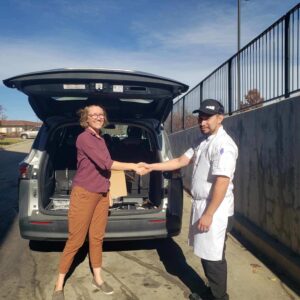
For several years now, the Bon Appétit team at Willamette University has been working closely with the Union Gospel Mission in Salem, OR. General Manager Eric Thomas shares that the partnership with UGM has been a great way to reduce waste while supporting the community. To create a reliable program, he explains, “We maintain clear communication with our partner and schedule regular pickups based on our production patterns.” For teams newly establishing a food recovery program, Eric suggests identifying a flexible local organization and building a strong relationship through consistent communication.
Goucher College and Project PLASE
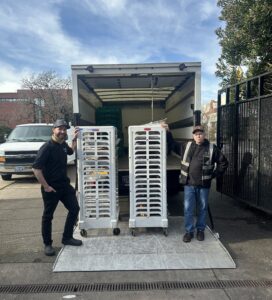
Bon Appétit at Goucher College is a proud partner with the student-led Food Recovery Team to support Project PLASE in Baltimore, MD. General Manager David Friendlich describes the many moving pieces that help ensure a successful program: “Following each service, our team carefully packages, labels, and stores surplus food to ensure it remains fresh and high-quality. From there, dedicated student volunteers manage the logistics of delivery to Project PLASE. The success of this program relies on seamless communication and the deep compassion of Goucher students, whose commitment to the well-being of our community makes this vital work possible.” This long-term partnership has existed for over seven years and is a cornerstone of the Goucher team’s commitment to sustainability and reducing food waste.
Colorado Christian University and “We Don’t Waste”
The Bon Appétit team at Colorado Christian University quickly mobilized at the end of 2025, establishing a new food recovery partnership with a local organization in Denver, CO called We Don’t Waste, demonstrating that successful partnerships don’t need years of history to have immediate impact. Executive Chef Grant Ruesch explains how they established a relationship with a partner, first by doing research and outreach to a few organizations, making sure they have the capacity to pick up food at least once or twice a week. He shares, “Consistency is key for a successful program on both sides of the partnership.” For the CCU team, this means considering what types of food are best suited for donation and reheating, proper cooling for food safety, and then diligently packaging, labeling, and dating the food before it is picked up by volunteers and distributed to community members.